Summer in Michigan brings backyard cookouts, gardening, camping trips, fresh seasonal produce, family gatherings, lake weekends, and outdoor meals. During this time of year, veterinary clinics often see an increase in pets getting into foods they should not eat.
Sometimes a guest slips a dog a treat under the picnic table. Other times, pets help themselves to leftovers from the grill, fallen fruit in the yard, or snacks left within reach during travel and summer gatherings.
While some summer foods for dogs and cats can be safe in moderation, others may cause digestive upset, pancreatitis, choking hazards, intestinal blockages, or even toxicity. Understanding which foods are safe and which foods should be avoided can help keep pets healthy all season long.
Backyard Barbecue Foods That Can Be Unsafe for Pets
Cookouts and summer gatherings often involve rich foods that smell irresistible to pets. Foods that commonly cause problems include:
- Fatty meats such as bacon, sausage, burgers, ribs, and hot dogs
- Bones from chicken, ribs, or steak
- Corn cobs
- Greasy leftovers
- Barbecue sauces and marinades
Fatty Foods and Pancreatitis Risks
Even small amounts of rich, fatty foods can trigger vomiting, diarrhea, or pancreatitis in some pets. Pancreatitis is inflammation of the pancreas and can become serious quickly, especially in dogs. Symptoms may include vomiting, abdominal pain, lethargy, decreased appetite, diarrhea, or restlessness.
Toxic Seasonings
Many barbecue meats and sauces also contain onion, garlic, chives, or seasonings that can be harmful to dogs and cats.
Onion and garlic toxicity can damage red blood cells and may lead to weakness, vomiting, lethargy, pale gums, or anemia. Cats are especially sensitive to onion and garlic toxicity, but dogs can also become seriously ill.
Bones, Corn Cobs, and Summer Emergencies
Bones can splinter and create choking hazards or intestinal injuries. Corn cobs are another common summertime emergency because dogs may swallow them whole, causing dangerous intestinal blockages that sometimes require surgery.
Summer Fruits and Vegetables Unsafe for Pets
Summer fruits, backyard gardens, and home fruit trees are another common source of questions for pet parents. Michigan pet parents sometimes ask questions like, “Can dogs eat cherries?” during summer fruit season.
Toxic Fruits
Grapes and raisins are well-known fruit hazards and can cause serious illness, including kidney damage, in dogs. Researchers still do not fully understand why grapes and raisins are toxic to dogs, and reactions can vary from pet to pet. Cats do not commonly eat grapes or raisins, so less information is available, but veterinarians generally recommend keeping grapes and raisins away from cats as well.
Fruits With Pits
Fruits with pits deserve caution because they can create choking hazards or intestinal blockages if swallowed. Cherries, peaches, plums, apricots, and nectarines also contain compounds in their pits, leaves, and stems that can release cyanide if chewed or crushed.
Pets may encounter these risks not only from fruit shared during meals, but also from fallen fruit, yard trees, garden debris, or trimmed branches left within reach outdoors.
Rotting fruit on the ground can ferment and upset a pet’s stomach. In rare cases, fermented fruit may even expose pets to alcohol.
Pet parents should promptly clean up fallen fruit, especially fruit with pits, and consider keeping pets out of gardens or fruiting areas to help prevent accidental exposure to unsafe foods.
Toxic Vegetables and Garden Plants
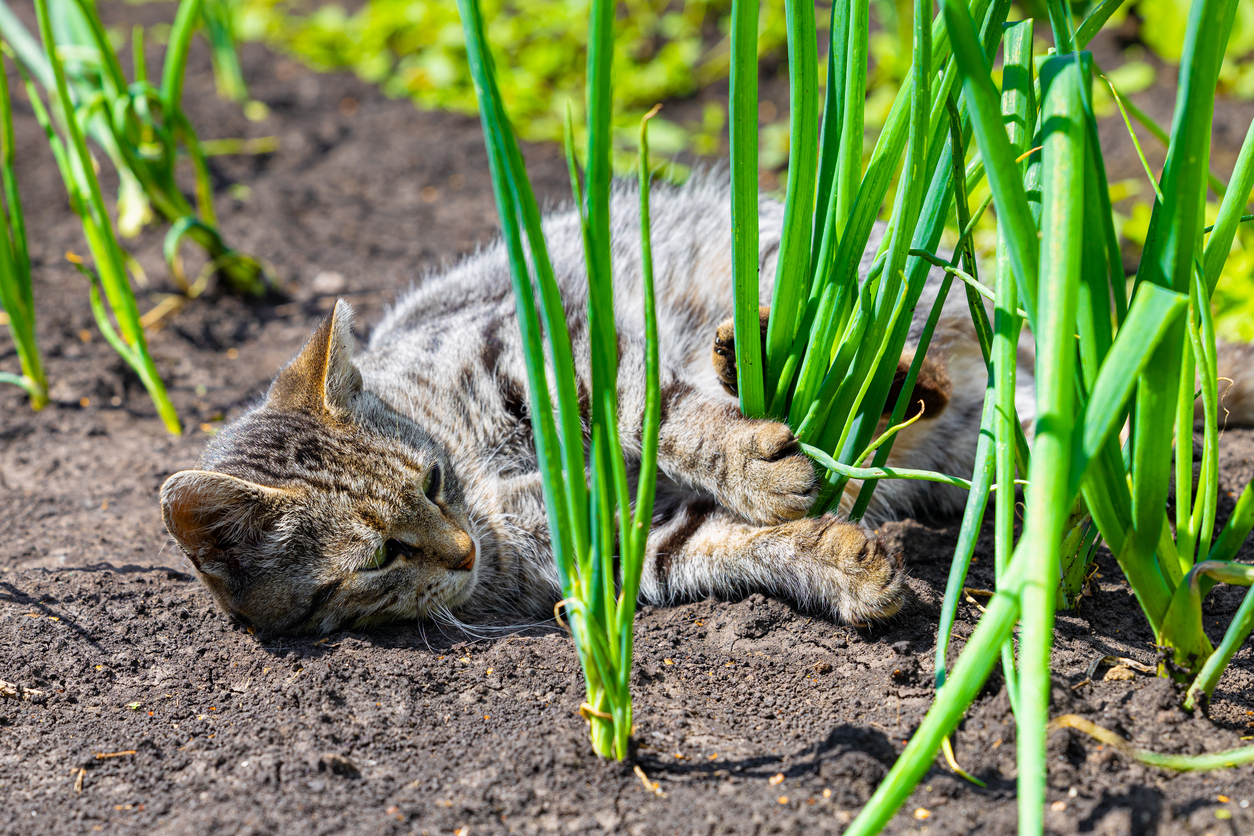
Backyard gardens can create risks, too. Onions, garlic, chives, and leeks — common garden plants in the allium family — can be toxic to dogs and cats.
Rhubarb is another important garden plant to keep pets away from. The leaves are the primary concern because they contain oxalic acid, which can bind with calcium in the bloodstream and form crystals that may damage the kidneys and other organs.
Potatoes also require caution. Raw potatoes, green potatoes, potato sprouts, and potato plants contain compounds that can be harmful to pets.
Mustard seeds and mustard plants may also cause problems for dogs and cats. Certain compounds in mustard can irritate the digestive tract and may lead to vomiting, diarrhea, or severe gastroenteritis.
Can Dogs and Cats Eat Salmon and Other Fish?
Summer is also a popular time for fishing trips, camping weekends, and outdoor adventures. Pet parents may wonder whether it is safe to share fish with their pets.
Certain types of fish can be shared with dogs and cats in moderation when prepared safely and served plain. For example, salmon, cod, whitefish, and sardines can provide protein and omega-3 fatty acids.
Fish should be fully cooked and served plain, without bones, butter, garlic butter, salt, sauces, or seasonings. If you want to feed your pet canned fish, buy the cans that say, “No salt added.”
Avoid fish that is:
- Raw or undercooked
- Contains bones
- Cooked with oil, butter, sauces, salt, or seasonings
- Smoked fish products which may contain excess salt and seasonings
Frozen Treats and Summer Desserts
Hot weather often leads owners to want to share cold treats with pets, but many desserts are not ideal for dogs and cats.
Dairy, Sugar, and Xylitol Concerns
Ice cream, whipped cream, cheese-based snacks, and other dairy products may cause stomach upset because many pets have difficulty digesting dairy.
Frozen treats and rich desserts are also high in fat, which may contribute to pancreatitis in sensitive pets.
Sugar-free desserts can be even more dangerous if they contain xylitol, an artificial sweetener that is extremely toxic to dogs.
Chocolate desserts, alcohol-containing treats, and heavily sweetened foods should also be avoided.
Safer Cool Treats for Hot Days
If owners want to offer a cool summer treat, safer options may include:
- Small pieces of seedless watermelon
- Frozen blueberries
- Pet-safe frozen treats approved by a veterinarian
For more information about common household and food toxins, visit Pet Poison Helpline.
Pets Staying with Sitters or Family Members
Summer travel often means pets stay with pet sitters, boarding facilities, friends, or family members. Leaving clear feeding instructions can help reduce problems while pet parents are away.
Remind caretakers not to leave plates unattended outdoors and to check yards for fallen fruit before letting pets outside.
You can also read our related blog on preparing pets for summer travel and pet sitting here:
PET BOARDING AND TRAVEL CHECKLIST
Signs a Pet May Have Eaten Something Unsafe
Contact your veterinarian or pet poison control if your pet develops symptoms such as:
- Vomiting
- Diarrhea
- Drooling
- Loss of appetite
- Lethargy
- Abdominal pain
- Difficulty breathing
- Repeated attempts to vomit
- Weakness or collapse
Quick action can make a major difference if a pet has eaten something toxic or develops a blockage.
Helping Pets Stay Safe This Summer
Summer should be enjoyable for both pets and their families. A little extra caution around outdoor gatherings, gardens, vacations, fishing trips, seasonal produce, and summer foods can help prevent unnecessary emergencies.
If you have questions about summer foods for dogs and cats, or if your pet may have eaten something harmful, contact Schoolcraft Veterinary Clinic in Schoolcraft, MI. Our team is here to help keep your pets safe, healthy, and enjoying summer alongside your family.
Frequently Asked Questions About Summer Foods and Pets
Why are fatty foods dangerous for pets?
Rich, fatty foods can make the pancreas work harder because the pancreas helps digest fats. In some dogs and cats, this extra stimulation may trigger pancreatitis, an inflammation of the pancreas. When the pancreas becomes inflamed, digestive enzymes can begin damaging the pancreas itself. Symptoms may include vomiting, abdominal pain, diarrhea, lethargy, and decreased appetite.
Can one bite of unsafe food make a pet sick?
It depends on the food, the amount eaten, and the individual pet. Some pets may only experience mild stomach upset, while others can develop serious reactions or intestinal blockages.
Foods such as grapes, raisins, xylitol, onions, garlic, chocolate, and alcohol should be considered potential emergencies, and pet parents should contact their veterinarian or a pet poison control hotline immediately.
Can dogs and cats eat dates?
Dates are not considered highly toxic to dogs or cats, but they are not an ideal treat for pets. Date pits can create choking hazards or intestinal blockages if swallowed. Dates are also high in sugar and fiber, which may cause digestive upset in some pets. If a pet eats dates with the pit still inside, contact your veterinarian for guidance.
Can moldy fruit make dogs and cats sick?
Yes. Moldy or heavily spoiled fruit can be dangerous for dogs and cats. As fruit breaks down, certain molds can grow and produce harmful substances called mycotoxins.
Depending on the type of mold and the amount eaten, mycotoxins can affect the digestive system or nervous system. Signs of illness may include vomiting, diarrhea, drooling, weakness, tremors, loss of coordination, seizures, or lethargy.
If you suspect your pet has eaten moldy fruit, contact your veterinarian promptly.